
The 30-share Sensex jumped 729 points to end at 28,076 and the 50-share Nifty soared 217 points to end at 8,494.

Government hits back, tells rating agency to introspect on processes.

On Monday, the rupee gained 16 paise.

Rajan strongly defends RBI's decision to hold the key rates in the absence of any new data points.

As a result, the forecast of eight per cent retail inflation by January next year looks achievable.

One incident should not be used to generalise the health of all cooperative banks, says RBI governor Shaktikanta Das.

The speed at which he led the central bank in different areas -- ranging from internal reorganisation to inflation fighting, stabilising the currency, taking on rogue corporations, cleaning up bank balance sheets, and opening the sector -- makes one believe that Rajan knew he had only three years to do his job. A fascinating excerpt from Tamal Bandyopadhyay's MUST-READ Roller Coaster: An Affair with Banking.

After unseasonal rains, supply disruptions and pandemic-induced woes pushed retail inflation well over the Reserve Bank's comfort zone in 2020, the scenario is likely to stay that way at least in the short term as economic recovery slowly gains foothold. For most part of this year, pricier food items pushed the retail inflation, based on Consumer Price Index (CPI), higher in the range of 6.58-7.61 per cent, except for March when the reading was 5.91 per cent. Experts believe retail inflation is likely to average around 6.3 per cent this fiscal and mostly will remain sticky going forward owing to pick-up in demand across sectors.

Reserve Bank of India (RBI) Governor Raghuram Rajan's decision to cut rates last week surprised even top officials.
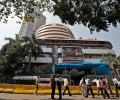
There were more than three losers against every gainer on BSE
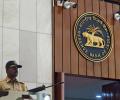
The size of the Reserve Bank's balance sheet, which is reflective of activities carried out by it in pursuance of currency issue function as well as monetary policy and reserve management, has increased by 6.99 per cent during the nine-month period ended March 31, 2021. While income for the year decreased by 10.96 per cent, the expenditure decreased by 63.10 per cent, as per the RBI's Annual Report for 2020-21. The year ended with an overall surplus of Rs 99,122 crore as against Rs 57,127.53 crore in the previous year, representing an increase of 73.51 per cent, it added.

While Raghuram Rajan's departure under these circumstances is a pity, it would be wrong to conclude that the RBI or the economy cannot do without him.
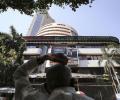
Adani Ports, HUL and L&T gained the most, while ICICI Bank, ONGC, GAIL and Tata Steel lost the most
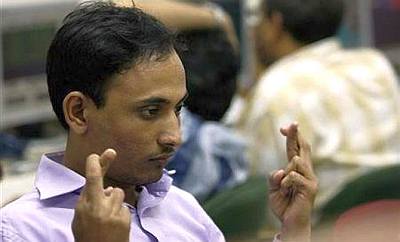
Macro and micro environment are becoming more challenging.

The career bureaucrat-turned-central banker walked into the 19th floor corner room of the Reserve Bank on December 12, 2018. Since February 2019, the Das-led RBI has cut the repo rate by a whopping 135 basis points to support the sagging growth, including an unprecedented 35 bps reduction in August. As he completes one year at the helm, woes in the NBFC sector, overall health of the banking sector and steeply falling economic growth are among the major challenges that needs to be tackled sooner than later.
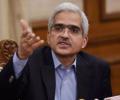
RBI Governor Shaktikanta Das said the central bank saw economic growth slowdown in February, prompting it to cut rates ahead of the curve and wondered why markets were surprised with the decision to pause rate reduction. Noting that there is a need for an "informed and objective discussion" on the country's economy, Das said the RBI would do "whatever is necessary" to address growth slowdown, spikes in inflation as well to ensure good health of banks and non-bank lenders. The apex bank went for five consecutive rate cuts starting in February this year, making it a cumulative reduction of 1.35 per cent.

Ajay Banga was on Wednesday appointed the next president of the World Bank, becoming the first-ever Indian-American to head the global financial institution which said it looks forward to working with him at a time when it's tackling the toughest development challenges facing developing countries. "The executive directors of the World Bank today selected Ajay Banga as president of the World Bank for a five-year term beginning June 2, 2023," the bank said in a press statement. In February, President Joe Biden announced that the US would be nominating Banga, 63, to lead the World Bank because he is "well equipped" to lead the global institution at "this critical moment in history."
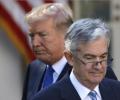
In a drastic measure to stem any major disruption to the US economy as a result of the coronavirus outbreak, the Federal Reserve has cut its benchmark interest rate to almost zero and said it would buy USD700 billion in bonds. The covid-19 pandemic has sickened more than 156,000 people worldwide and left more than 5,800 dead. The death toll in the US stands at 68, while infections neared 3,700.
Central bank sees action as discriminatory, unfair

Finance Minister Arun Jaitley presented the Union Budget.

The National Democratic Alliance won 64 seats.

Getting out of the zero-rate armchair was overdue, and many in the market will be glad it has finally happened

Banks seems to be upset over RBI's move over rate cut.

Other members of the high-level advisory committee are former RBI Deputy Governor Usha Thorat, former Securities and Exchange Board of India Chairman C B Bhave, and Nachiket M Mor, Director of the Central Board of Directors of RBI, Governor Raghuram Rajan said.

Budget was a mild disappointment. Yet, the bull run continues.

'Waiting for a market correction and optimising entry time in the markets will be akin to missing the woods for the trees.'

RBI may revise remuneration for banks.
He will be the first bureaucrat to head the central bank in almost five years.

Revising up inflation bands for the central bank will hurt the poor, former deputy governor of RBI Viral Acharya said on Wednesday, terming the current 4 per cent midpoint on price-rise as a "reasonable target".
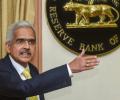
Central banking is a science, not an art, Tamal Bandyopadhyay tells RBI Governor Shaktikanta Das.

Economists and investors want RBI to retain independence in setting rates

Net sales growth for the quarter ended December (Q3FY20) was 4.5 per cent on a year-on-year (YoY) basis for companies that have declared their results so far, compared to an 8.4 per cent rise in the first half of the financial year. This indicates that there could be a further rise in days' sales of inventory.

Finance Commission has got new team who are committed to growth initiatives.
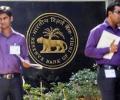
The discussion paper is released at a time when the central bank is sifting through 26 applications seeking an entry into the fray.

Rupee, bonds may see knee-jerk reaction, as Urjit Patel is considered an inflation warrior

The message to bankers from Raghuram Rajan was clear.

'Most importantly, marking a departure from the past, the RBI has made it clear that it is not overtly worried about the level of the local currency,' notes Tamal Bandyopadhyay.

There is so much liquidity in the system, in the global economy, and that's why the stock market is very buoyant. It will certainly witness correction in the future: RBI's Das.

For banks to cut loan rates, the cost of deposits needs to come down, and there is no sign of that happening.

'The slide in growth has arisen primarily because we have an NBFC crisis on top of a banking crisis,' points out T T Ram Mohan.
